

Modern architecture values clean lines, minimalism, and lighting that enhances form rather than competes with it. As a result, waterproof linear LED lights have rapidly replaced traditional fluorescent batten lights across outdoor and semi‑outdoor commercial spaces.
But beyond aesthetics, why exactly are waterproof linear lights a better solution?
This article breaks down the differences in performance, design impact, durability, installation, and long‑term value—helping you understand why the shift is happening industry‑wide.
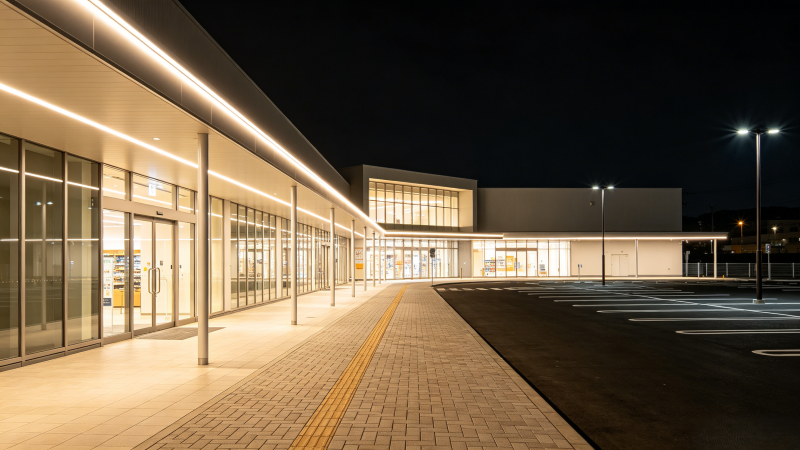
Modern architecture emphasizes visual clarity and simplicity. Traditional batten fixtures—originally designed for industrial utilities—do not match this aesthetic.
Waterproof linear luminaires integrate seamlessly into:
Facade grids
Canopy edges
Corridor beams
Structural lines
Their slim profiles and continuous illumination reinforce the geometry of modern buildings.
Fluorescent battens typically introduce:
Visible clips and brackets
Bulky diffusers
Uneven tube brightness
Industrial‑looking housings
These conflict with contemporary design intent.
They can be:
Recessed
Surface‑mounted with invisible clips
Integrated into canopy troughs or facade cavities
Resulting in a premium, minimal, and cohesive architectural appearance.
Lighting quality affects safety, comfort, and perception.
Linear LEDs emit a smooth, unbroken line of light. Traditional battens often produce:
Hot spots around each tube
Dark gaps between fixtures
Uneven or flickering illumination
Uniformity is especially critical in:
Walkways
Parking garages
Building entrances
Retail outdoor corridors
Linear LEDs use modern lenses and diffusers engineered for:
Low glare
Targeted distribution
Wide or asymmetric beams
Softer shadows
Fluorescent battens offer limited optical flexibility.
LEDs maintain stable color temperature and deliver good CRI, improving:
Skin tones
Material surfaces
Signage visibility
CCTV camera performance
Fluorescent lamps degrade in color over time.
Outdoor and semi‑outdoor commercial spaces demand reliable fixtures.
Waterproof linear lights resist:
Rain
Sprays
Humidity
Dust
Condensation
Traditional batten lights, unless specially enclosed, do not meet these requirements and fail quickly in damp locations.
Traditional battens often suffer:
Water ingress
Rusted clips
Yellowed covers
Tube flicker
Ballast issues
Linear LEDs eliminate these vulnerabilities with sealed housings and integrated drivers.
Modern linear fixtures use:
UV‑stable diffusers
Corrosion‑resistant aluminum
Polymer end caps
Ensuring long‑term performance even in sun‑exposed canopies or open corridors.
Long‑term cost is a major concern in commercial facilities.
LEDs typically last:
30,000–50,000+ hours
vs
10,000–12,000 hours for fluorescent tubes
Fewer replacements mean less labor and fewer disruptions.
Traditional battens require:
Tube changes
Starter/ballast replacements
Regular inspection for flicker
LED linear lights are solid‑state and require minimal intervention.
LED linear fixtures commonly save:
40%–60% energy
compared to traditional fluorescent batten systems.
This contributes directly to operational savings for:
Shopping malls
Office buildings
Outdoor retail areas
Transit stations
Hospitality facilities
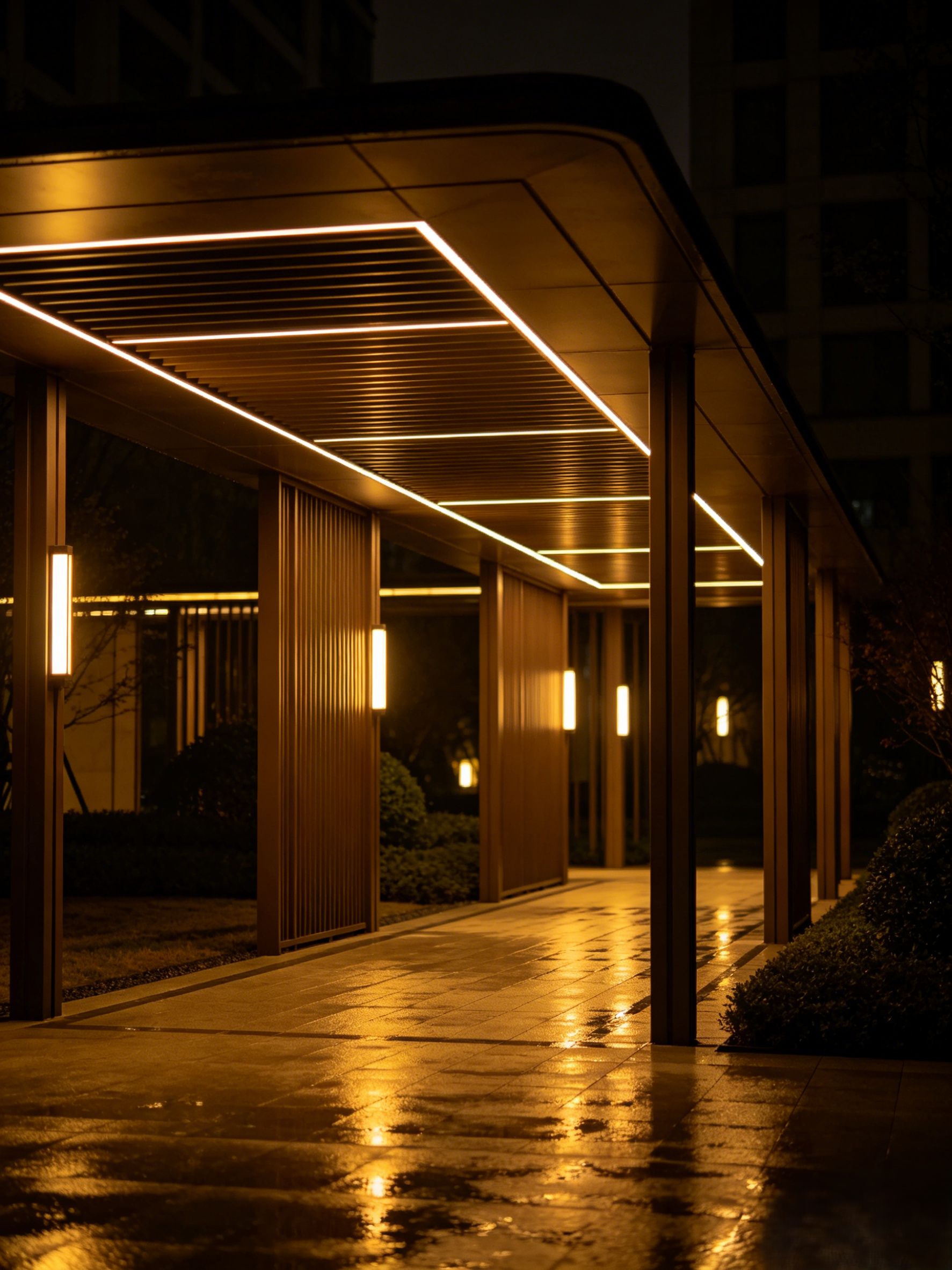
Safety is a key consideration in outdoor commercial design.
Uniform light helps people:
Avoid obstacles
Identify steps and ramps
See other pedestrians clearly
Continuous light strips guide:
Vehicle lanes
Curbs
Corners
Drop‑off loops
Traditional battens often produce disjointed lighting unsuitable for long lanes.
Stable LED light ensures:
More accurate facial recognition
Better color accuracy
Clearer recordings
Fluorescent flicker reduces camera clarity.
Modern architecture demands flexible lighting tools.
Linear LEDs can be:
Surface‑mounted
Recessed
Suspended
Integrated into structures
Traditional battens are limited primarily to surface mounting.
Linear lights offer:
Wide beam
Narrow beam
Wall wash
Wall graze
Asymmetric optics
Fluorescent fixtures rarely provide such options.
Linear LEDs come in:
0.6m
1.2m
1.5m
Custom lengths
Allowing long, continuous lines without breaks.
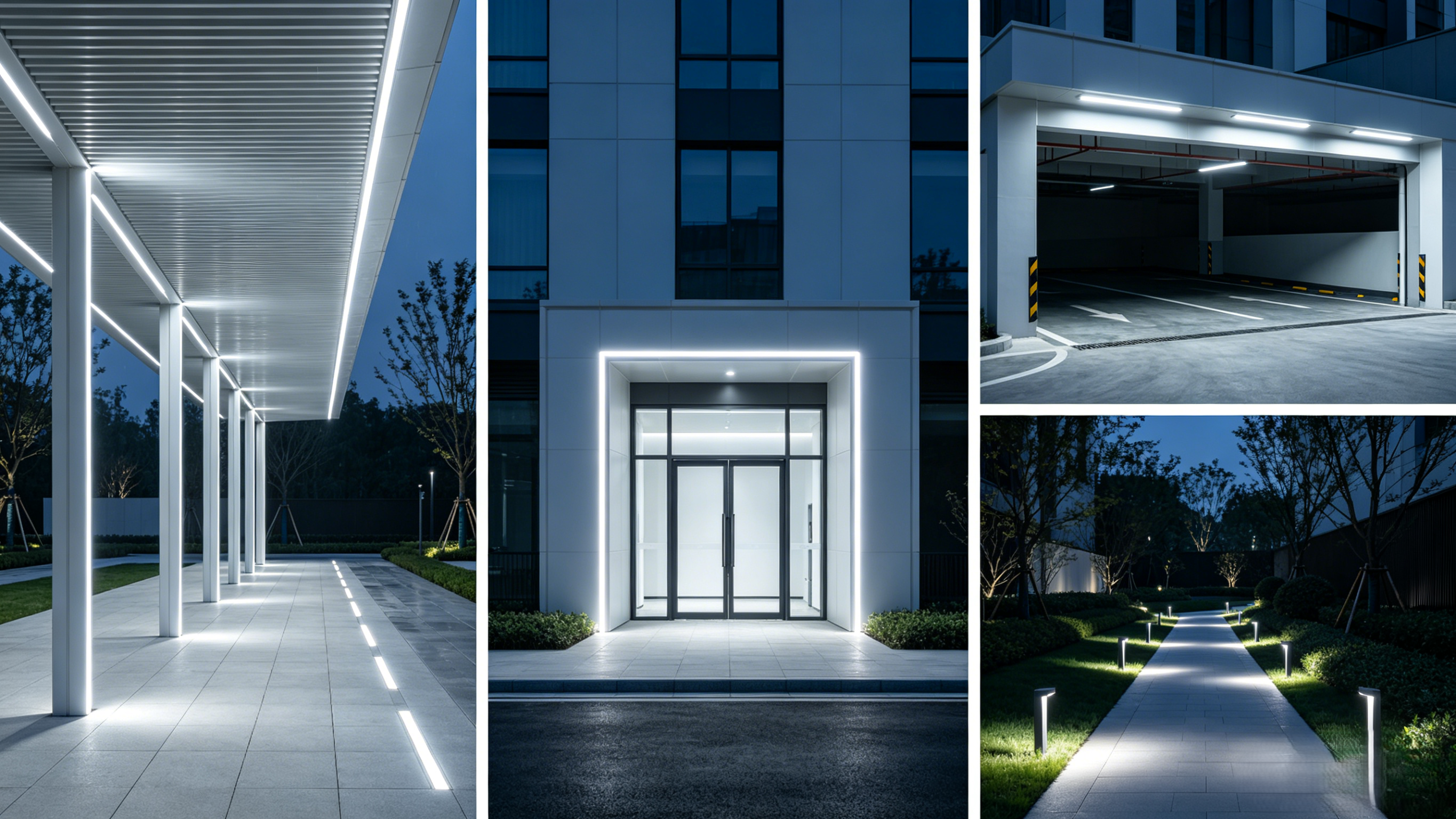
Waterproof linear lights outperform battens in areas such as:
Building entrances & canopies
Semi‑outdoor corridors & breezeways
Parking garages & ramps
Outdoor retail walkways
Transit hub perimeters
Architectural facades
Commercial plazas
They offer both improved performance and a more refined architectural finish.
Waterproof linear lights have overtaken traditional batten fixtures for good reasons:
Cleaner architectural aesthetics
Superior lighting quality
Higher durability in outdoor conditions
Lower energy consumption
Reduced maintenance
Greater flexibility in design applications
Better safety and security performance
For architects, lighting designers, and commercial developers seeking a modern, reliable, and long‑lasting solution, waterproof linear lights are the clear choice over traditional batten lights.